Last updated November 25, 2026

Free roof inspection with deck photos before we talk money - GAF and Owens Corning certified installation
Seasonal Roofing Care for Everett: Year-Round Homeowner’s Guide
Most homeowners assume January is the month their roof is most at risk. In Everett, the real danger window opens earlier. Around late September and October, falling leaves and needle drop load up gutters and valleys right as rainfall intensity climbs toward its winter peak. Blocked drainage plus steady rain is what turns a small maintenance gap into standing water, backed-up moisture, and the kind of interior damage that drives most local claims. This guide walks through a care calendar built for the Puget Sound marine climate specifically, not a generic four-season template: what to do in late summer, how to time moss treatment, how to read your roof after a convergence zone storm, and how to catch ventilation problems from the attic before they show up on your ceiling.
Quick Answer
Everett roofs do best on a late-summer-to-early-fall maintenance rhythm: clear debris and check drainage before the heavy rain season, treat moss in early fall rather than spring, inspect after windstorms for lifted ridge caps and flashing, monitor the attic through winter for condensation, and assess granule loss each spring to gauge how much life the shingles have left. Timing matters more than frequency. A roof serviced in the right weeks outperforms one serviced more often at the wrong time.
Styles & brands we work with
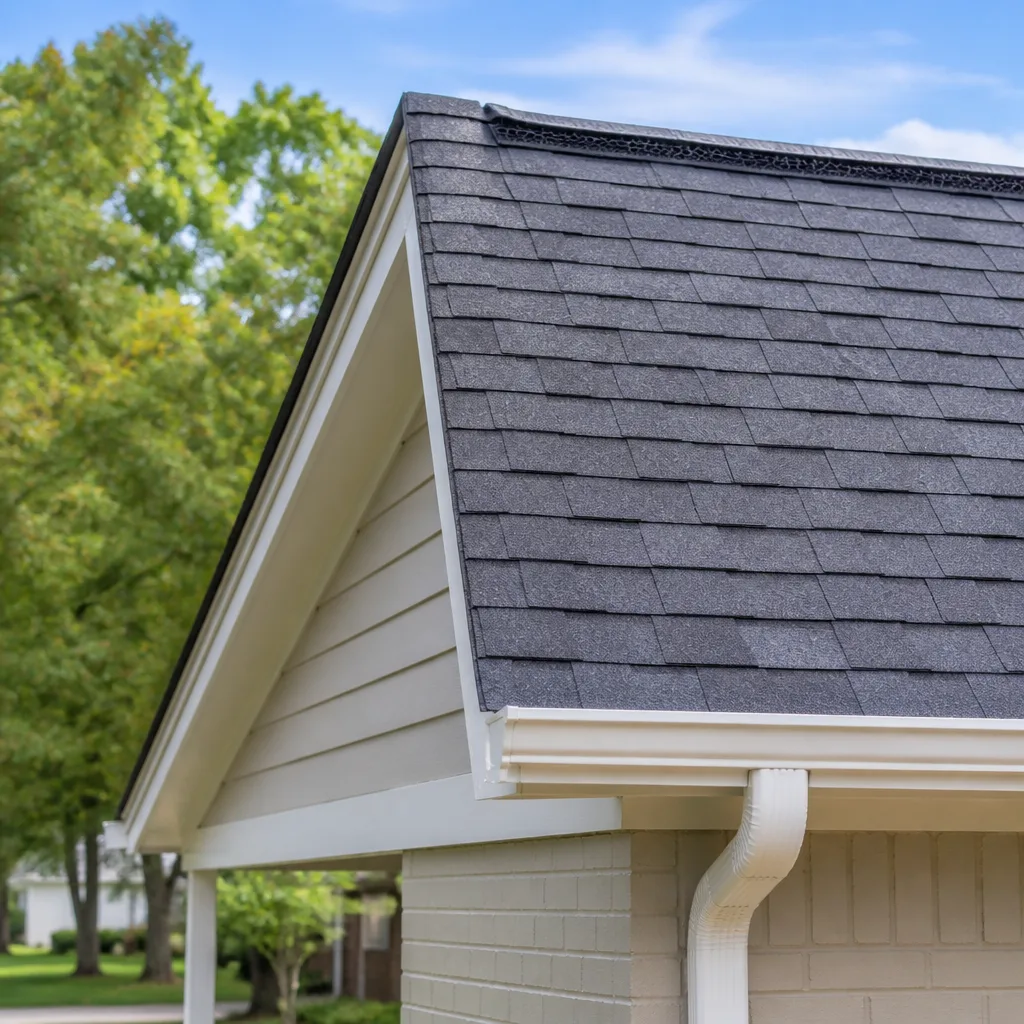
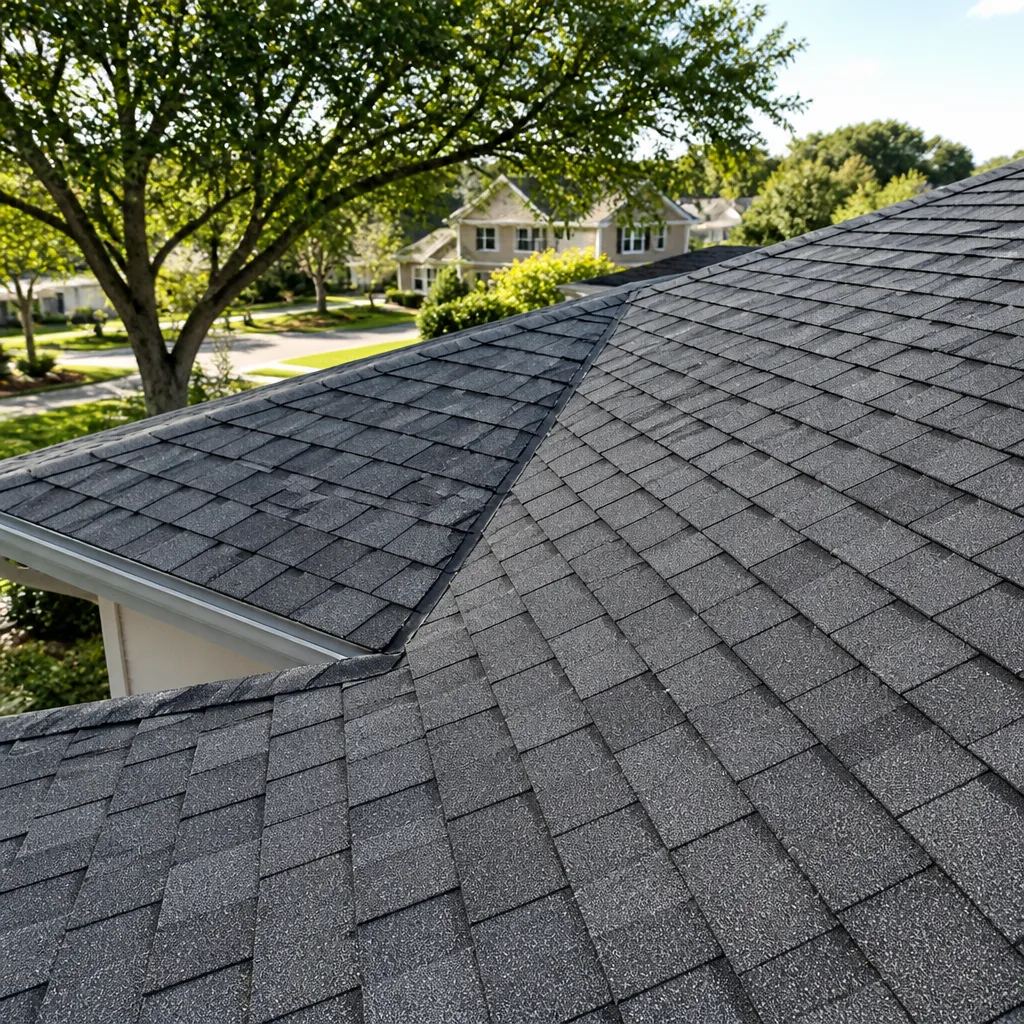
- Architectural shingles
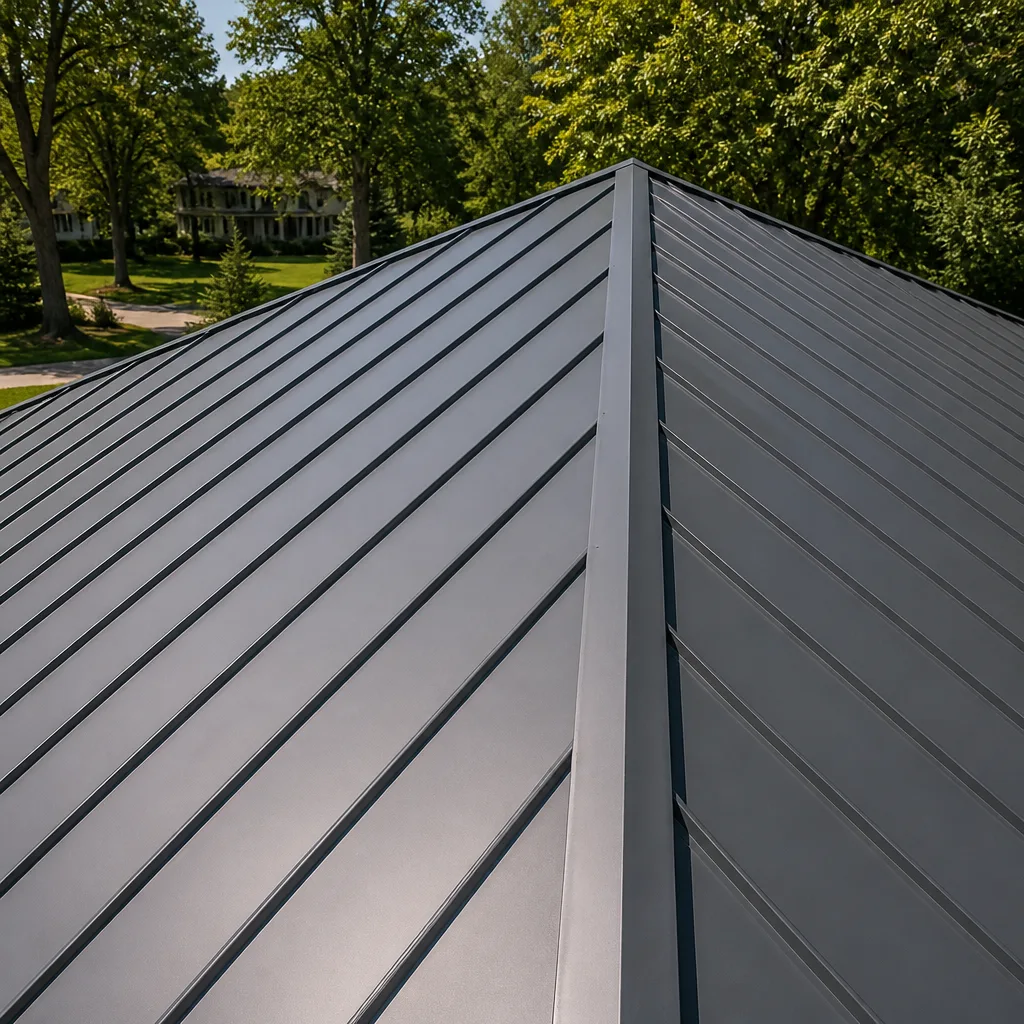
- Metal roofing
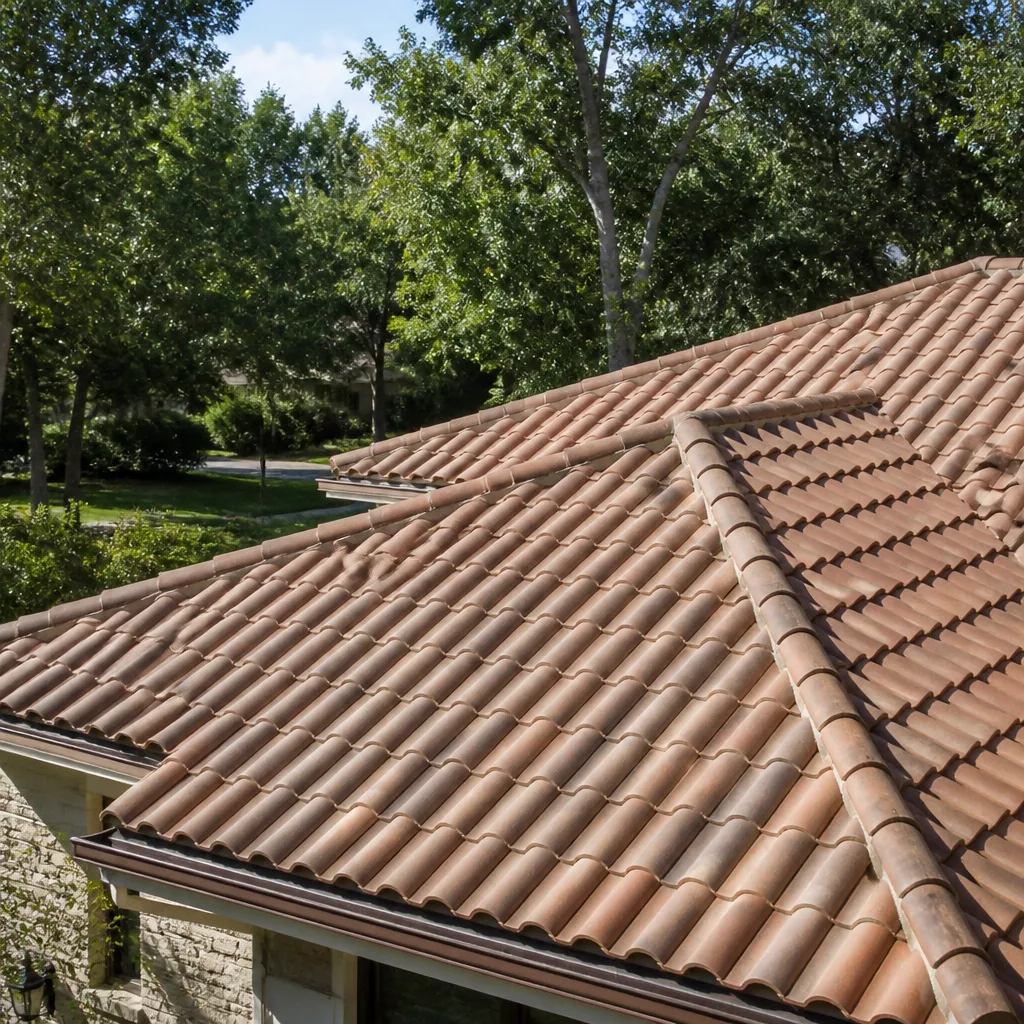
- Tile roofing
- GAF
- Owens Corning
- Flat & low-slope
Table of Contents
- Late August: The Most Important Weeks of the Year
- Moss Treatment Timing in Everett
- Inspecting for Wind Damage After Convergence Zone Storms
- Winter Attic Monitoring: Vapor Drive and Condensation
- Spring Checklist: Reading Granule Loss in Your Gutters
- How Material and Brand Choice Change Your Care Calendar
- Common Mistakes to Avoid
- When to Call a Professional
Late August: The Most Important Weeks of the Year
If you do one thing for your roof in Everett, do it before the rain returns. Late August through mid-September is the window when the work you complete actually protects the house through the wet months ahead. By October, the debris load is already high and the rain is already here. The sequence below is the order that matters most.
- Clear the roof surface. Moss, needles, leaf litter, and twigs hold moisture against the shingles and slow runoff. On a steep or high roof, this is work for a trained professional, not a weekend ladder project.
- Clear gutters and downspouts. This is the single highest-value task of the year in Everett. A clogged gutter sends water back under the eave and along the fascia.
- Check the valleys. Water concentrates in the valleys between roof planes. Confirm they’re clear and that the flashing is intact.
- Inspect the attic and underside of the roof deck. Look for staining, daylight, or soft spots before the wet season hides them.
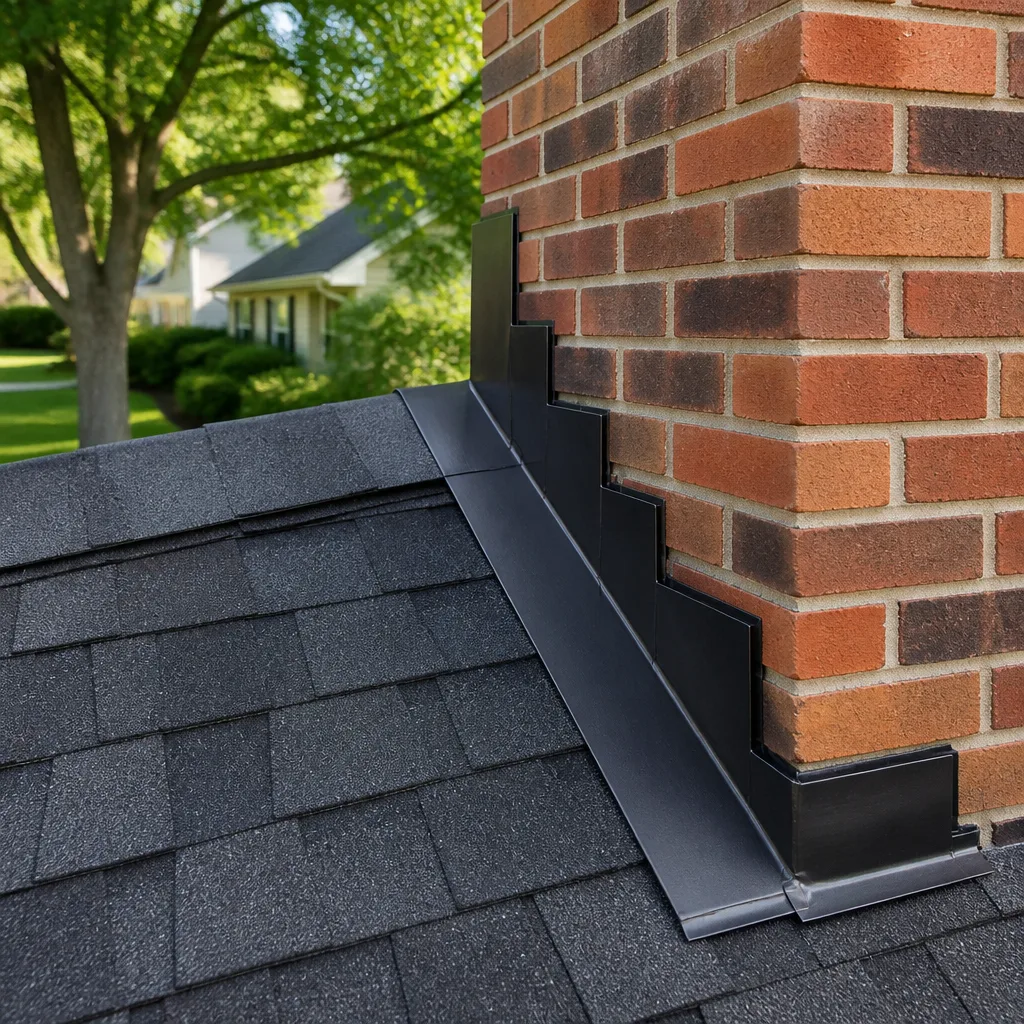
- Confirm flashing at penetrations and chimney. These are the most common leak points on an aging roof.
The reason this timing is specific to Everett is drainage. Our heaviest, most sustained rainfall arrives in late fall and winter, not in a single event. A roof that enters that stretch with clear drainage sheds water the way it’s designed to. A roof that enters it with blocked gutters and debris-filled valleys is working against itself for months. The old idea that spring cleaning is “roof cleaning season” gets it backwards out here. By spring, the damage window has already passed.
If you’re already thinking about a bigger project, this is also the natural time to get a realistic picture of replacement numbers. You can read more about roof replacement and what drives cost in the local market before the season turns.
Moss Treatment Timing in Everett
Moss is a fact of life on north-facing and shaded roof planes throughout the Pacific Northwest. The mistake most homeowners make is treating it in spring. In Everett, an early-fall treatment does more good than a spring one, and here’s why.
Moss growth slows in the cold but doesn’t stop, and the wet months are when it’s actively spreading and holding water against the shingles. A zinc sulfate treatment applied in early fall acts as a preventive barrier going into the rain season, so new growth has a harder time establishing. A spring treatment kills growth that’s already done its moisture damage over winter. Preventing is cheaper than undoing.
What to know before you treat:
- Never pressure-wash shingles. High pressure strips the protective granules and shortens the roof’s life. This is the most common self-inflicted damage we see on asphalt roofs.
- Treat, don’t scrub. Chemical treatments kill moss at the root; scrubbing breaks it loose and sends water under the edges.
- Mind the downspouts and plants below. Runoff from treatment carries into landscaping.
- Repeat as growth returns. Moss management is ongoing in this climate, not a one-time fix.
The treatment you choose also depends on what your roof is made of. Zinc and sulfate products are generally used on asphalt shingles; metal and tile handle moss differently and with different products. If you’re not sure which system is on your house, that’s a good reason to have it looked at before you buy anything.
Inspecting for Wind Damage After Convergence Zone Storms
Puget Sound convergence zone storms can hit hard and unevenly. One neighborhood gets a gust that lifts shingles while the next block is untouched. After a significant wind event, a targeted inspection of the right areas tells you whether you have a problem, before the next rain finds it.
Here’s a quick answer on where to look first: ridge caps, flashing, and the windward edges of the roof. Those are the first things to fail in a strong gust. Here’s the checklist:
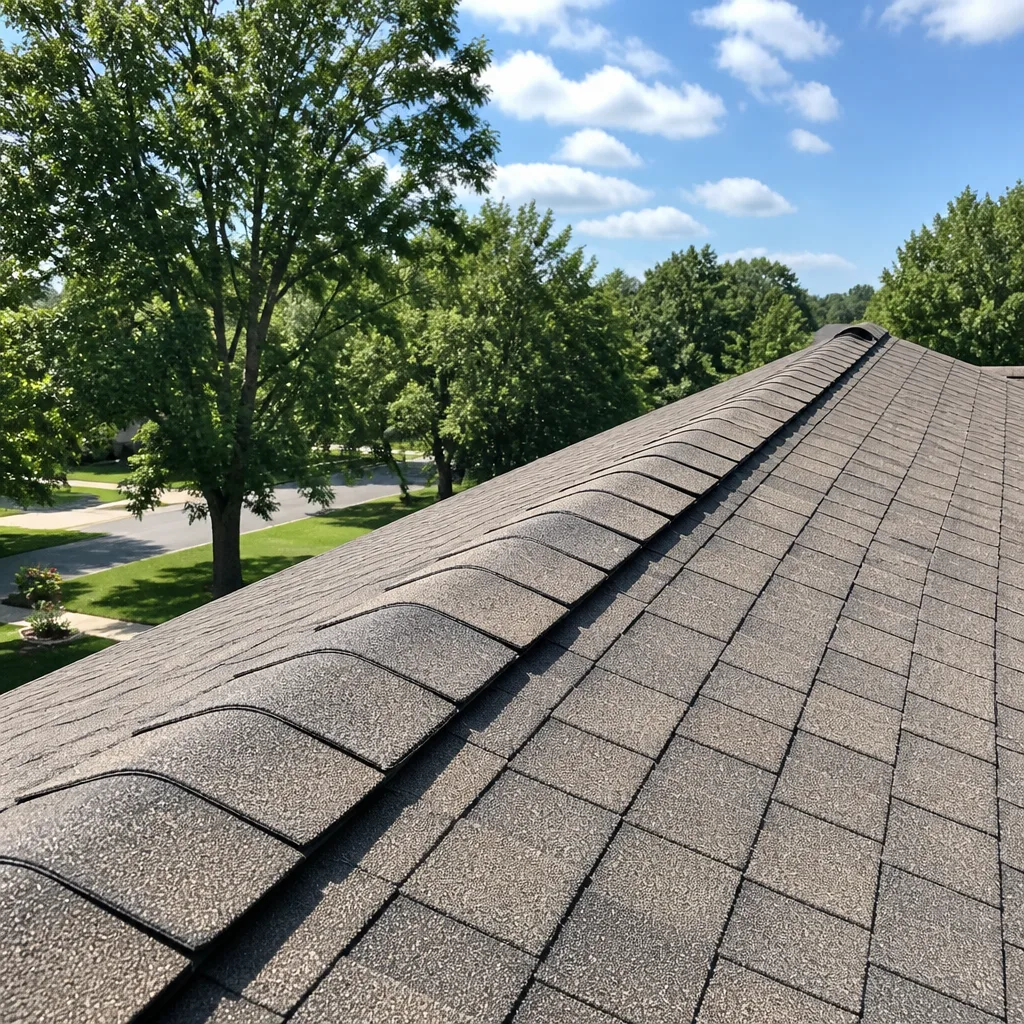
- Look at the ridge caps. These are the shingles running along the peak. Lifted, curled, or missing caps are a classic wind-damage sign and a frequent source of leaks.
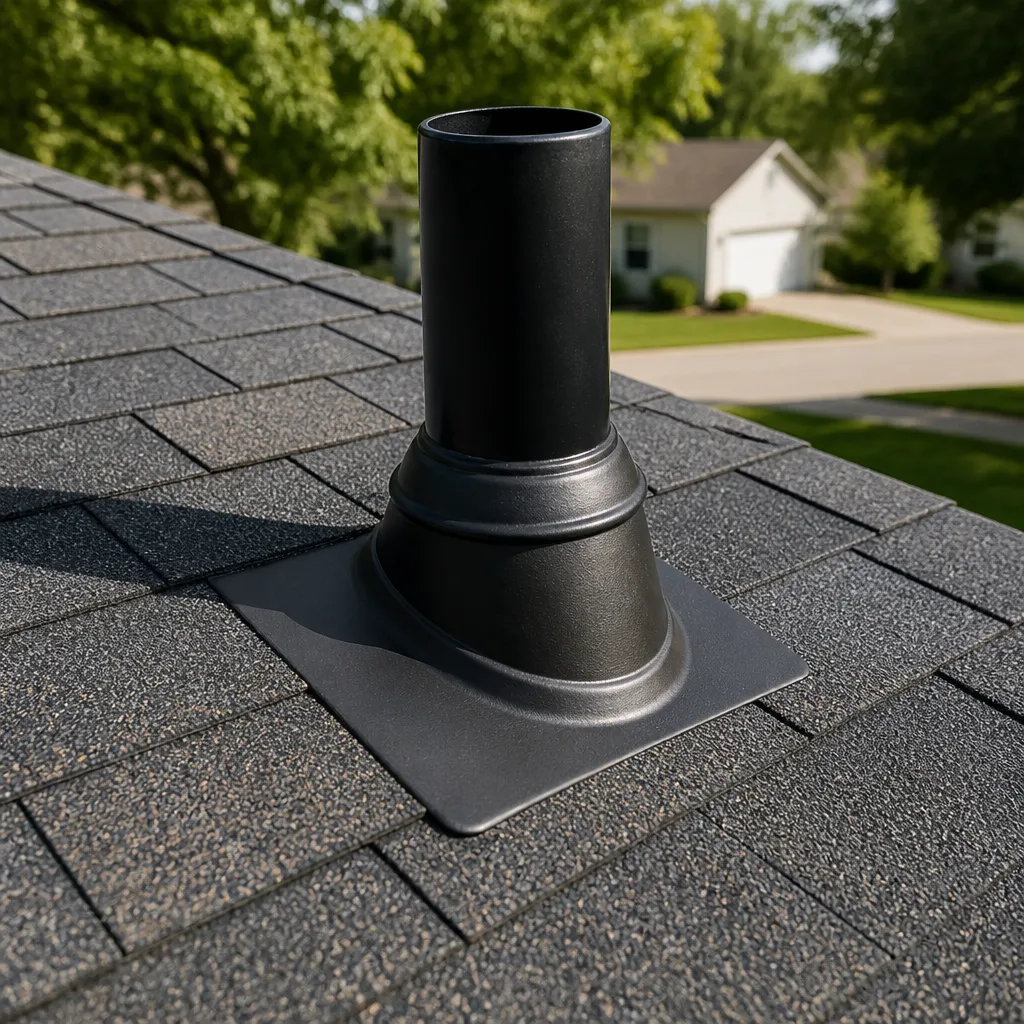
- Check flashing at the chimney, skylights, and vent pipes. Flashing is often sealed rather than nailed, so wind can tear it loose even when the surrounding shingles look fine.
- Scan the rake and eave edges. The windward edge of the roof takes the brunt of the load.
- Look for shingle tabs on the ground. Missing tabs in the yard mean missing tabs on the roof.
- Check the attic and ceilings for fresh stains after the next rain, especially near the areas above.
On tile roofs, wind damage shows differently: cracked or shifted tiles, and displaced ridge or hip pieces. On metal, look for loosened panels, lifted fasteners, and backed-out screws. Each system fails at its own weakest points, which is one reason we install across shingle roofing, tile, and metal rather than specializing in just one.
If you’re unsure what you’re looking at, an inspection after a storm is a reasonable, low-cost way to find out. Don’t wait for a ceiling stain to confirm what a pair of eyes on the roof could tell you right away.
Winter Attic Monitoring: Vapor Drive and Condensation
Through the wet season, your attic is doing quiet work that tells you a lot about ventilation and insulation problems before they show up on your drywall. Here’s the short answer: watch for condensation on the underside of the roof deck, rusty nails, and frost on the framing in cold snaps. Those are your signals.
The pattern to understand is vapor drive. Warmer, moist air from the living space rises into the attic, meets the cold roof deck, and condenses. In a marine climate like Everett’s, where the roof deck stays cool and damp for months, this shows up faster than it would in a drier, colder climate. What you’re looking for:
- Condensation on the underside of the deck and on the rafters. A few droplets in a cold snap aren’t a disaster, but persistent moisture is.
- Rusty nail tips and dark staining on the framing. Rust means moisture has been hanging around long enough to start corroding metal.
- Sagging or damp insulation. Wet insulation clumps and loses R-value, which makes the problem worse.
- Mold or musty smells. By the time mold appears in the attic, the ventilation problem has usually been present for a while.
What homeowners often miss is that these problems don’t announce themselves until they’ve done damage. An attic that’s damp all winter and only shows up as a ceiling stain in spring has been failing for months. The fix is usually ventilation and air sealing, which is a job for a contractor, not a DIY weekend. Catch it in December or January and you avoid the interior repair entirely. If the moisture is chronic, it’s also worth having the roof itself checked for flashing or fastener issues that could be contributing.
Spring Checklist: Reading Granule Loss in Your Gutters
When the wet season winds down, the gutters tell you how much life the shingles have left. Here’s the direct answer: a light sprinkle of granules in the gutter after a season is normal, but if the gutter below the downspout looks like a streambed full of asphalt grit, your shingles are shedding faster than they should. That’s your signal to get a professional assessment.
Asphalt shingles shed granules from day one, but the rate tells a story. Here’s how to read it:
- Look at what collects below the downspouts. Modest amounts at old downspout outlets are the environmental wear and tear of a normal season.
- Check the gutters along the full run. Heavy granule deposit along a whole plane, not just at the outlets, points to accelerated wear.
- Look for bald spots and exposed matting on the shingles themselves. Dark, shiny patches where granules have worn off are the visible sign.
- Check for curling and cracking. Spring is when you can see winter wear clearly on the surface of an aging roof.
- Write down what you find and when. Tracking observed wear from year to year gives you a real timeline rather than a guess.
Reading granule loss correctly lets you plan a new roof installation on your schedule rather than under pressure. That’s the difference between choosing a material and brand deliberately and calling whoever can get there first when the roof starts leaking.
How Material and Brand Choice Change Your Care Calendar
The maintenance routine we’ve described isn’t identical across all roofs. The material you have, and the brand of shingle on it, changes the specific tasks and the timing. Here’s how three core systems differ.
Asphalt shingles. The most common choice, and the most familiar to handle. Grading the shingle matters: a premium line like GAF or CertainTeed generally holds its granules and color longer than an entry-level product, and that wear pattern is exactly what you tracked in the gutter test above. The brands we install run from premium lines to value options like IKO, so the roof under the moss may have quite different underlying life depending on which line was chosen. Knowing what your roof is made of is a real advantage when you plan.
Metal roofing. Less granular wear and more about fasteners and panel alignment. Metal takes a wind inspection differently and doesn’t host the same moss pressure on the metal itself, though adjacent structures (trim, flashings, valleys) still hold debris.
Tile roofing. The long-lived option, but the most delicate to the wrong kind of care. Don’t walk it without knowing what you’re doing, and don’t pressure-wash it. Inspection after a storm is about cracked and shifted tiles, not granule loss.
These are different enough that most contractors stick to one. Having the choice among all three matters if you’re planning a replacement, because it lets you choose your material and brand rather than accepting whatever system a single-specialist contractor happens to install. That’s the core of how we work: you pick the right system for your home, budget, and climate, and we handle the installation with the manufacturer relationships that back it – GAF, CertainTeed, Owens Corning, IKO, Atlas, Tamko, and Boral. When you weigh the trade-offs (longevity, weight, curb appeal, cost), those manufacturer lines open a much wider spectrum of price points and warranty options under one contractor. If you’d like to see what the options look like, you can explore our Roofing Everett materials and start with a free estimate.
Common Mistakes to Avoid
- Saving roof cleaning for spring. In Everett, the most important maintenance window is late summer and early fall, before the heavy rain. By spring, the damage window has already passed, and the work can’t undo the wet season.
- Pressure-washing shingles. High pressure strips the granules and shortens the roof’s life. It’s the most common form of self-inflicted roof damage we see, and it’s entirely avoidable.
- Treating moss in spring instead of early fall. An early-fall zinc sulfate treatment prevents growth going into the rain season. A spring treatment only handles damage that’s already occurred.
- Ignoring the attic through winter. Condensation, rusty nails, and dark staining are early warning signs of a ventilation problem. Wait until you see a ceiling stain and you’ve lost the advantage of catching it early.
- Walking the roof yourself after a storm. Steep or high roofs make wind-damage inspection a safety issue, and shingle roofs can be slippery even when dry. Use binoculars from the ground, and call a professional for anything on the surface.
- Reading granule loss once and forgetting. A single gutter check tells you little. Tracking wear year over year is what turns a vague sense of “the roof is aging” into a real timeline for replacement.
- Letting debris build up through the fall. Once leaves and needles are loading the roof and gutters, they stay there through the wet season. Clearing them in late summer is what prevents that.
When to Call a Professional
Some roofing work is routine and some shouldn’t be attempted from a ladder. Roof cleaning, moss treatment, and storm inspections on steep or high roofs are work for a trained professional, particularly when a fall could be serious. Interior monitoring you can do yourself, but the moment you spot persistent condensation in the attic, fresh ceiling stains after rain, or granule loss that’s accelerating, it’s time to get eyes on the roof. Missing or damaged flashing after a storm, or ridge caps that look compromised, are also calls you shouldn’t put off. Roofing Everett offers free estimates in Everett. Written line-item quotes, and we can walk you through the options across asphalt shingle, tile, and metal without steering you toward one product. Call (425) 382-8630 to schedule your free estimate. We answer 24/7, with fast dispatch from 7am to 7pm, Sunday through Friday. A call outside dispatch hours is booked into the next opening.
See the difference
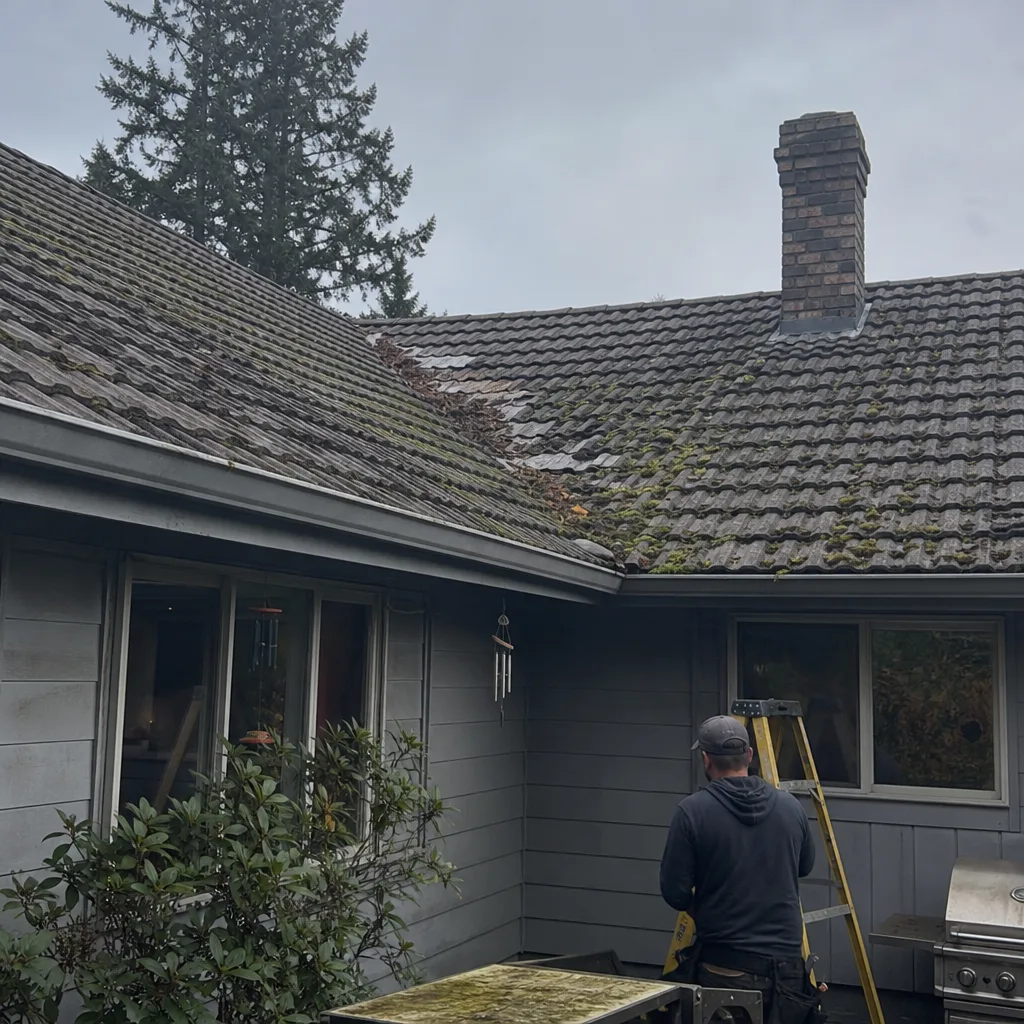 Before
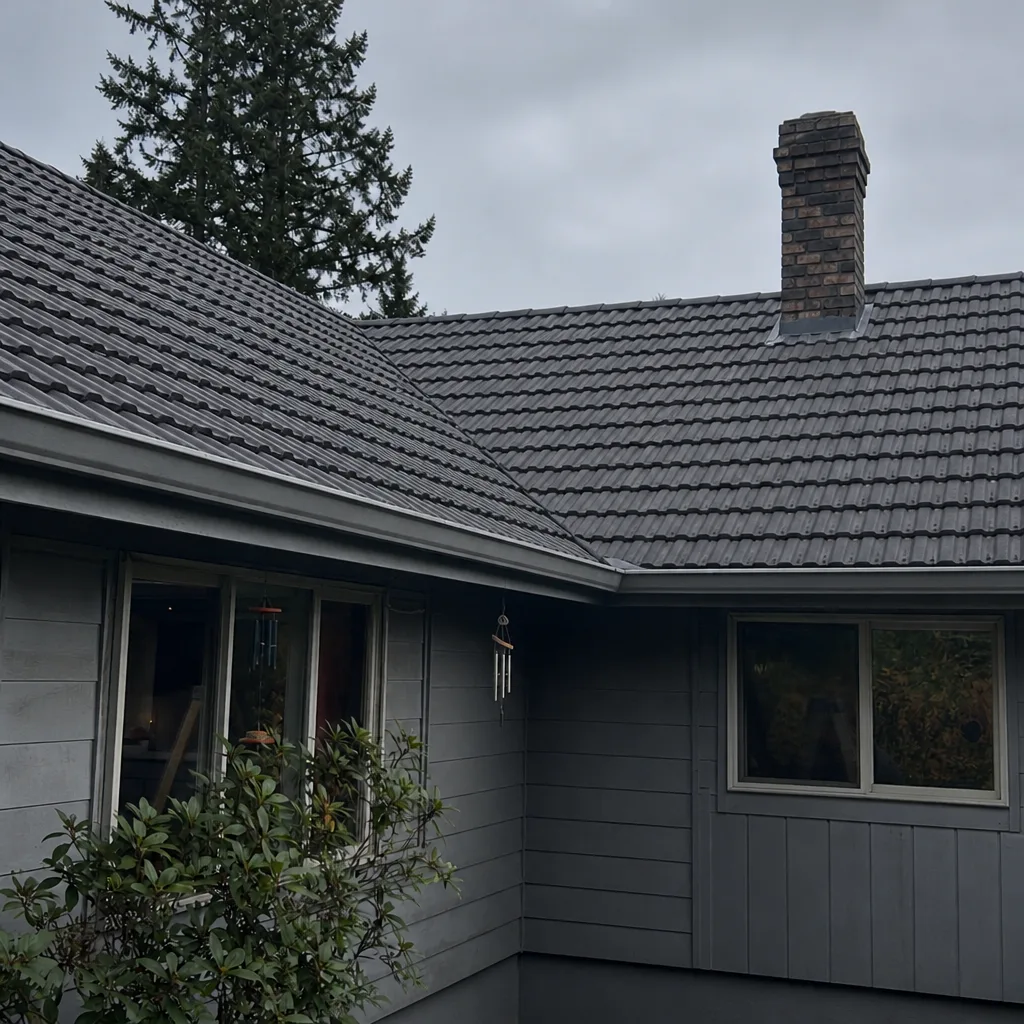 After
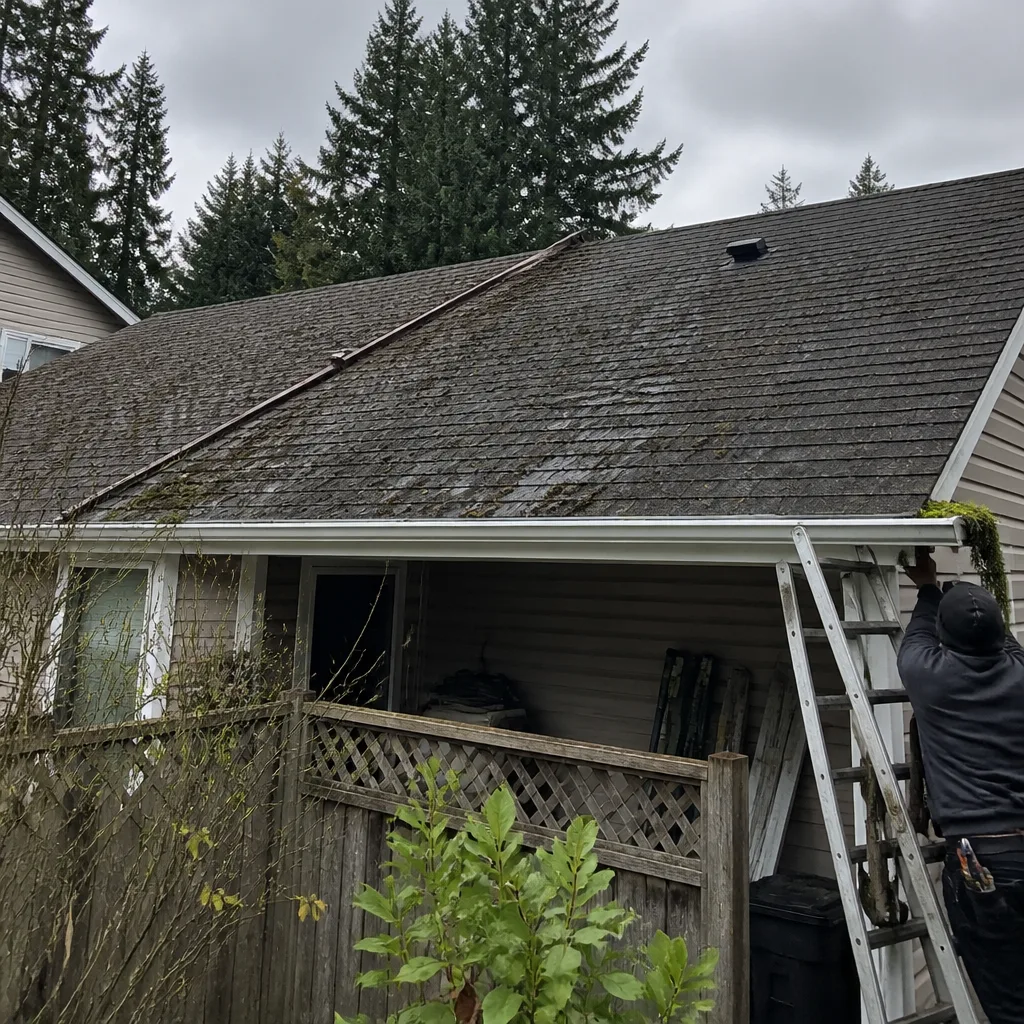 Before
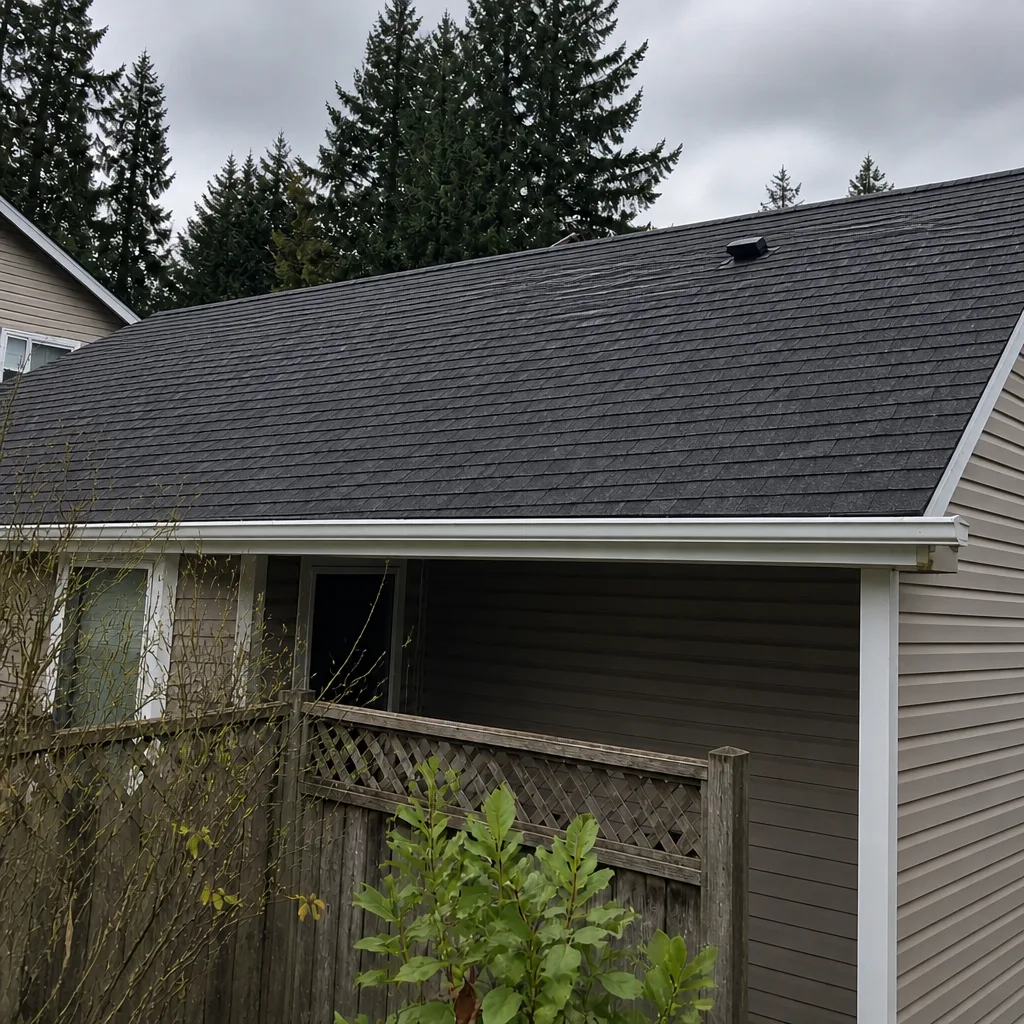 After
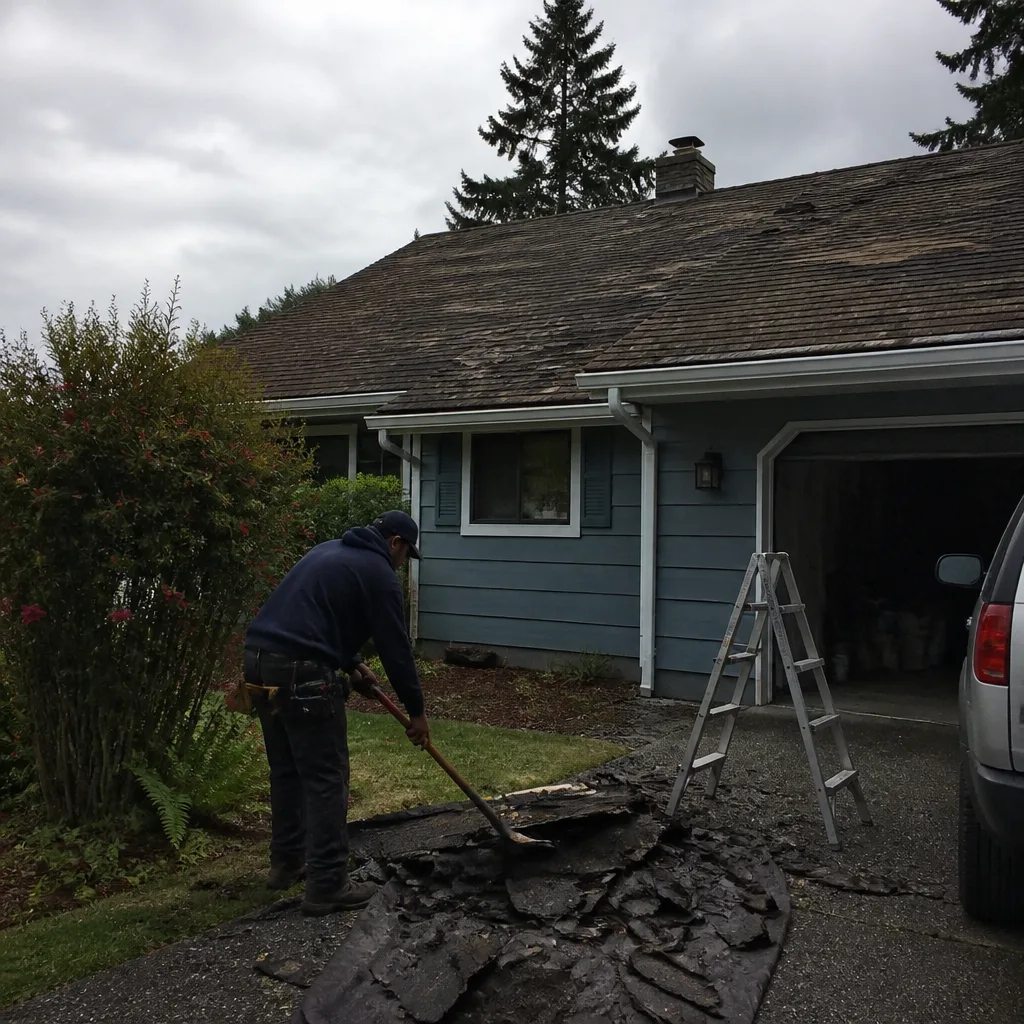 Before
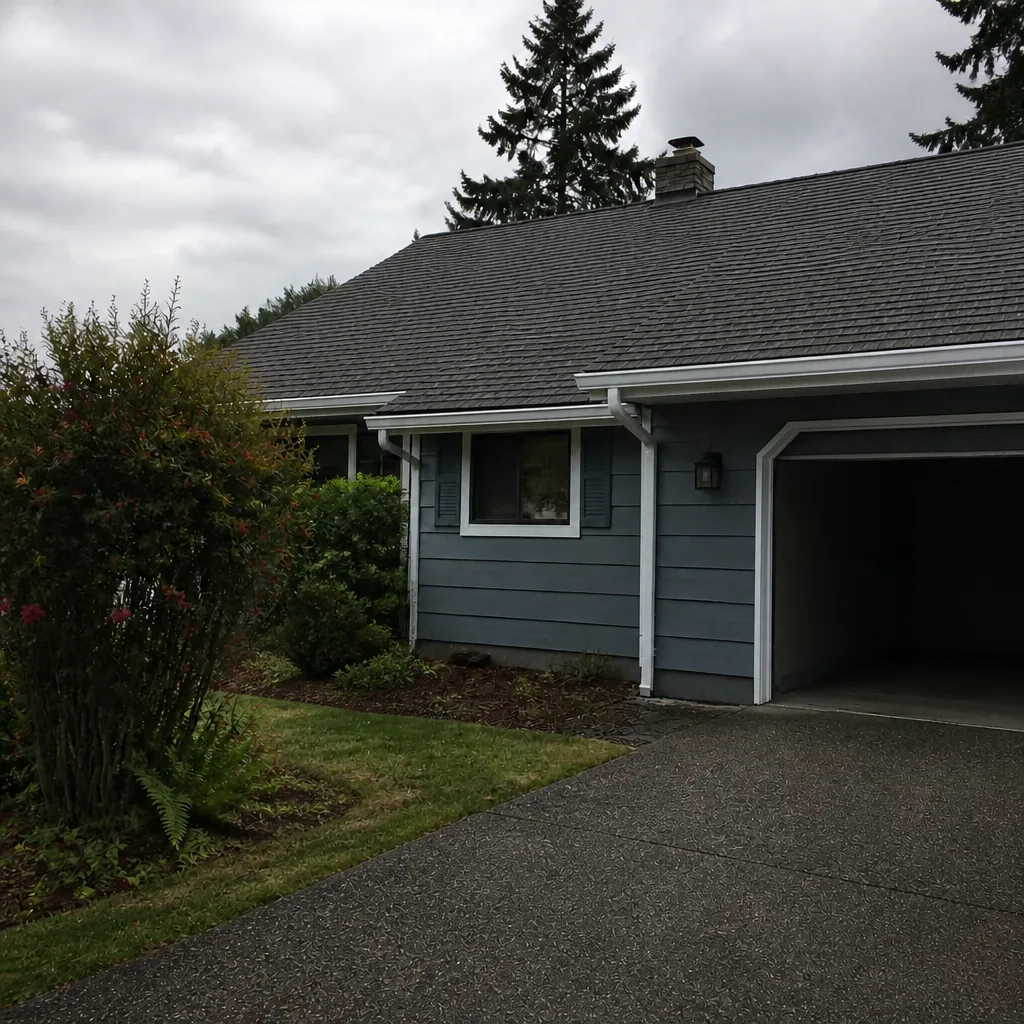 After
Frequently Asked Questions
Roof replacement in Everett is priced per job by the written estimate, and the range depends heavily on which material and brand you choose – from value-driven asphalt lines to premium tile and metal systems. That’s why we quote line-item by system rather than offering a single “starting” number. Call (425) 382-8630 for a free estimate on your specific roof.
The best time is early fall, before the heavy rain season, not spring. An early-fall zinc sulfate treatment acts as a preventive barrier going into the wet months, when moss is actively growing and holding water against the shingles. A spring treatment only kills growth that’s already caused moisture damage over winter. Call (425) 382-8630 to schedule a treatment.
Heavy snow load is rare in Everett compared with higher elevations, so the bigger seasonal risks here are blocked drainage and wind damage. The priority is entering the wet season with clear gutters and valleys, not preparing for a deep snowpack. For an inspection before winter, call (425) 382-8630.
No. We set the price per job with a written line-item estimate, and that’s the number you work from. If a scope change is genuinely needed, it’s discussed before it becomes work. Call (425) 382-8630 for a free, written estimate.
Not necessarily. Some granule loss after a wet season is normal life for an asphalt roof. What you’re looking for is the rate: heavy deposit along a whole roof plane, bald spots on the shingles, and accelerated wear across several years. That’s when a professional assessment is worth scheduling. Call (425) 382-8630 to have it checked.
They differ mainly in longevity, weight, curb appeal, and cost, and each handles the local climate in its own way. Asphalt shingles are the most common and suit most budgets; tile offers longer life and distinct curb appeal; metal sheds differently and has its own care routine. We install all three and work with manufacturers across the range, from GAF and CertainTeed to IKO and Tamko, so you can compare them on your terms. Call (425) 382-8630 to talk through the options.
The Bottom Line
Everett’s roof care calendar is set by rainfall timing, not temperature. The most impactful work happens before the heavy rain arrives: clearing debris and drainage in late August through September, treating moss in early fall, and reading your gutters in spring for granule loss that points to shingle life. Between those markers, a post-storm inspection of ridge caps and flashing, and a winter check of the attic for condensation, will catch most problems before they turn into interior damage. Our technicians have up to 8 years of experience working across shingle, tile, and metal systems, and we’re glad to help you match the right material and brand to your home. Call (425) 382-8630 for a free estimate. We answer 24/7. Fast dispatch from 7am to 7pm, Sunday through Friday.
Written by the team at Roofing Everett.