
Top Signs You Need Roofing Service – Don’t Ignore These
By the time you see a water stain on your ceiling, the roof deck underneath has likely been absorbing moisture for six to eighteen months. The leak you see isn’t the problem; it’s the report card on a problem that started much earlier. Most roof failure signs Everett homeowners notice – missing shingles, visible leaks – are late-stage symptoms. The early warnings live inside the attic and in the gutters, and catching them two to three years before failure is often the difference between a repair and a full replacement. If you’d rather not climb into the attic yourself, call (425) 382-8630.
Key Takeaways
- Attic clues (daylight, dark staining, compressed insulation) show up long before ceiling stains.
- Granule buildup in gutters is a shingle age indicator, and Everett’s rainfall flushes it out fast.
- Moss growth that holds moisture in the mat is different from harmless surface growth.
- Flashing failures around chimneys, skylights and pipe boots cause most local leaks.
- Repair vs. replace comes down to age, damage scope and remaining shingle life.
What does an attic inspection actually tell you about a roof in Everett?
An attic inspection tells you more about a roof’s health than a walk around the exterior ever will. The attic is where the deck, rafters and insulation show what the weather has been doing to them for years. Everett’s wet winters push a lot of moisture against a roof, and the attic is where that moisture leaves a trail. When we inspect an attic in Everett, we’re looking for three things in particular.
- Daylight penetration. Pinpricks of light through the roof deck boards mean gaps in the sheathing or flashing above. Even small openings let water in during a driving rain.
- Dark staining on rafters and decking. Look for brown or black streaks on the wood framing. That discoloration is moisture that has soaked in and dried repeatedly. If the wood feels soft or crumbles at a touch, the rot has gone deeper than the surface.
- Compressed or damp insulation. Insulation that looks flattened or feels damp has likely been wet. Wet insulation stops insulating, and it’s a strong signal that water is reaching it from above.
Take a flashlight up on a dry day and look at the underside of the roof deck. If you can see the sky or smell a musty, earthy odor, that’s your cue. These clues show up years before the ceiling stain.
Why do granules in the gutters matter in Everett?
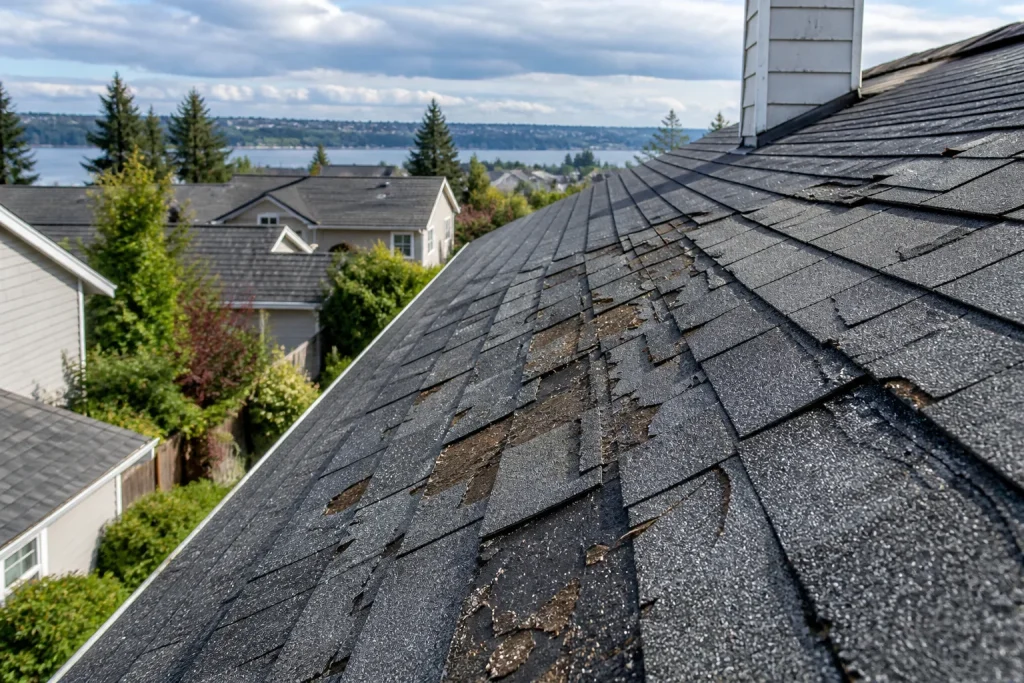
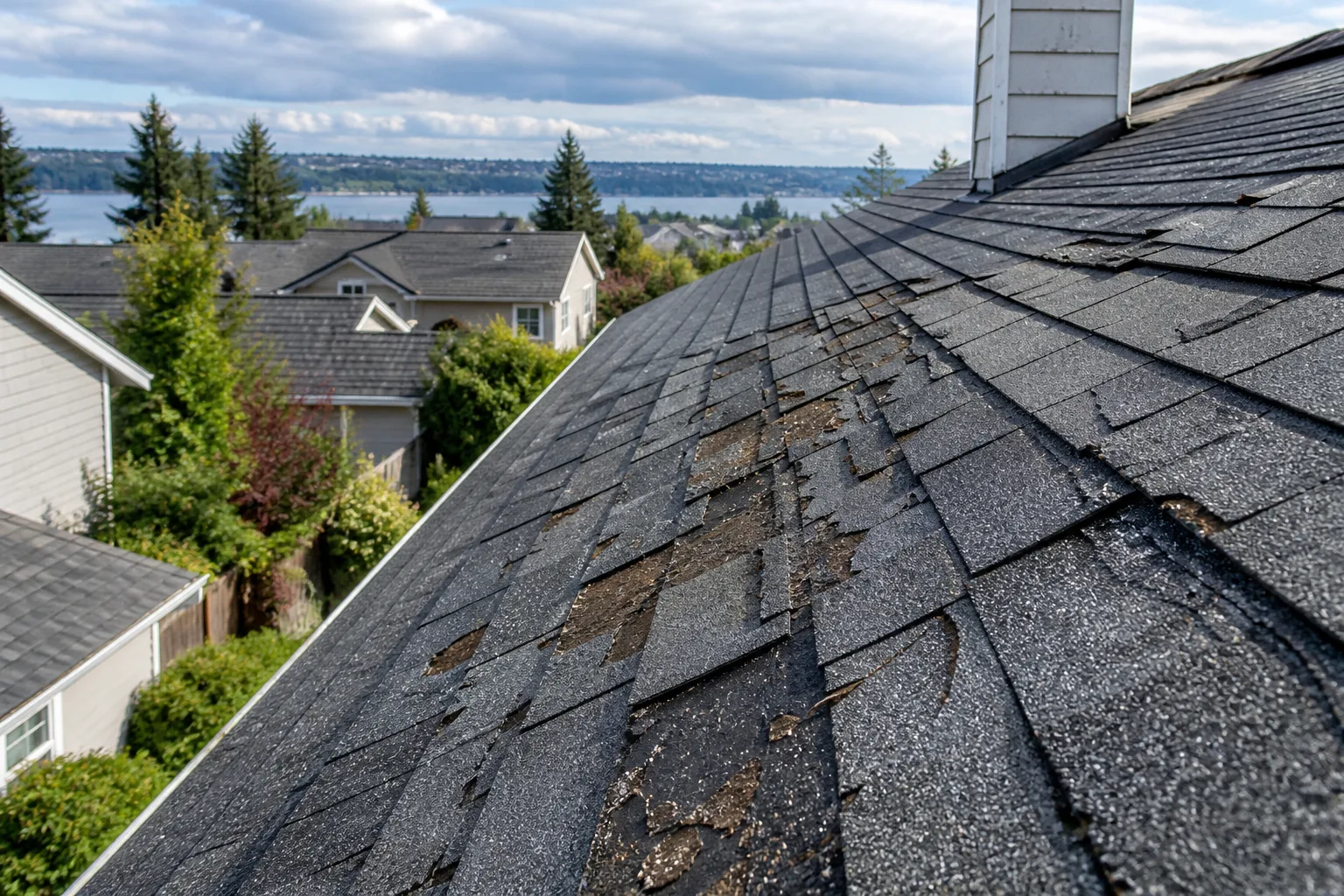
Granules washing off an asphalt shingle are how shingles age, and Everett’s rainfall flushes them out of the gutter system quickly. When shingles shed their protective mineral layer, the asphalt underneath starts to break down. A little grit in the gutter after a storm is normal. What you’re watching for is volume and pace.
- Normal granule loss: a light scattering of grit in the gutter, especially on a roof in its first few years.
- Replacement-level loss: piles of granules collecting at downspout outlets, or bald patches on the shingles themselves where the surface looks smooth and dark.
The Pacific Northwest’s steady rain is efficient at carrying loose granules away, so gutter accumulation here tells you more than it would in a drier climate. If you empty a gutter and it fills with grit again within a season, that’s the shingle telling you its service life is running out. This matters most on aging asphalt, and it’s one reason so many Everett homeowners eventually weigh shingle roofing against longer-lived systems.
What does moss growth tell you about a roof in Everett?
Moss growth tells you two things: how much moisture your roof holds, and whether that moisture is staying on the surface or soaking into the shingle. Everett’s damp, shaded conditions are ideal for moss, but not all growth means the same thing.
- Surface-level growth sits on top of the shingles and can often be cleared without the roof being compromised. It’s cosmetic and a maintenance issue.
- Moisture-retention growth has worked its way into the shingle mat. Look for moss growing in the seams between shingles or lifting the shingle edges. That’s a sign the mat itself is staying wet, and a wet mat breaks down faster.
The way to tell the difference is to look at where the moss sits and whether the shingles around it feel loose. On Everett roofs, moss that keeps returning in the same shaded valleys after cleaning is a sign the roof isn’t shedding water the way it should. If you’re considering a roof that handles damp conditions better, metal and tile are worth a conversation.
What are the flashing failure signs around chimneys, skylights and pipe boots?
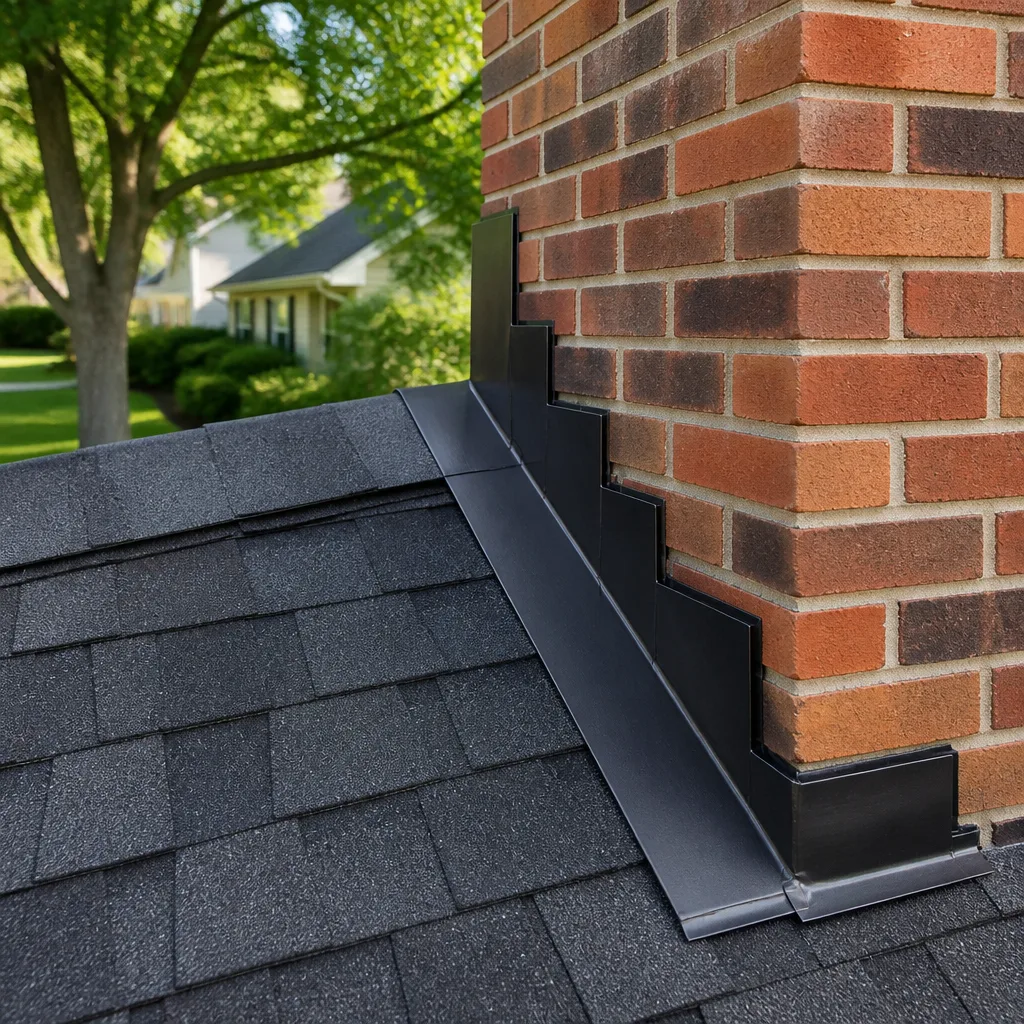
Flashing failures are the most common source of Everett roof leaks, and they get misdiagnosed as shingle failure more often than anything else. Flashing is the metal that seals the roof to whatever pokes through it: the chimney, skylights, vents and pipe boots. Those joints take more weather stress than the field of shingles around them, and they fail first.
- Chimney flashing: look for rusted or lifted metal where the roof meets the chimney, and crumbling sealant along that seam.
- Skylights: water tracking along the frame, or condensation between the panes, points to a flashing or seal problem rather than the glass.
- Pipe boots: the rubber collar around a pipe can crack and split over time. A split boot lets water straight down into the deck, usually right above a ceiling you’ll notice later.
Next time it rains, watch those spots from the attic. A slow drip at the chimney or a damp ring around a pipe boot is a flashing repair, not a whole-roof problem, and catching it early keeps it that way.
How do you decide between roof repair and replacement in Everett?
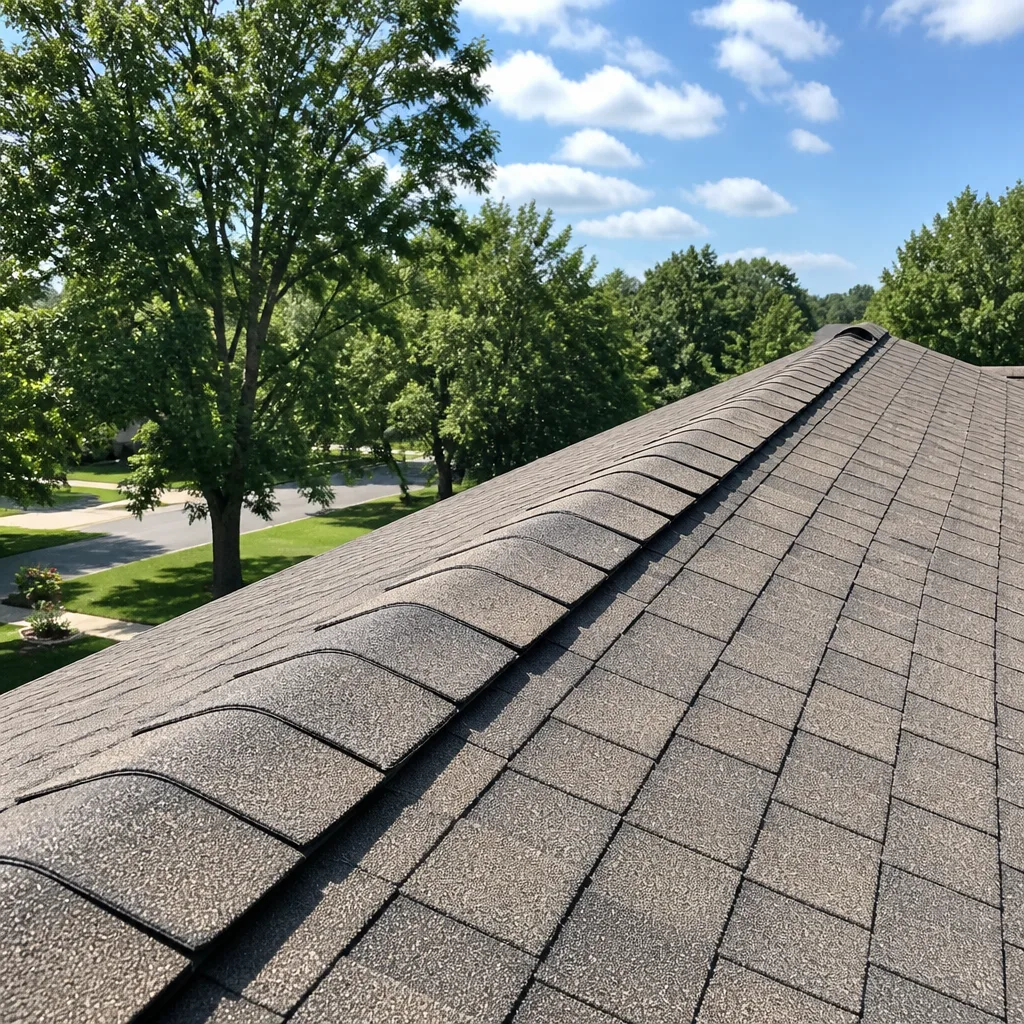
Repair makes sense when the roof has plenty of service life left and the damage is isolated. Replacement makes sense when the damage is widespread or the roof is near the end of its life. Here’s how we frame the call for Everett roofs:
- Age of the roof. An asphalt roof past the middle of its expected life with several problem spots is a replacement candidate. A younger roof with one flashing leak is a repair.
- Scope of damage. Damage confined to one area – a flashing, a vent, a few shingles – can usually be fixed. Damage spread across multiple slopes, or rot in the deck, points toward replacement.
- Remaining shingle life. Bald patches, curling edges and heavy granule loss mean the shingles are done. Patching a failing roof just moves the next problem a few months down the road.
If repairs would only buy another year or two, roof replacement is the better spend. When a house is being built or re-roofed from the deck up, that’s a new roof installation. We install asphalt shingle, tile and metal, and we work with brands like GAF, CertainTeed and Owens Corning so the material fits the budget, not the other way around.
When to call a pro
Call a professional when you see daylight in the attic, soft decking, or moss you can’t clear with a soft brush. Don’t walk a wet or steep roof yourself. Skylights, chimneys and steep pitches are where falls happen, and a trained roofer has the footing and the gear for it. We answer 24/7, with fast dispatch from 7am to 7pm, Sunday through Friday.
Related services in Everett: Roofing Everett handles repairs and full installations across shingle, tile and metal.
The Bottom Line
Most roof failures announce themselves in the attic and the gutters long before they reach your ceiling. Watch for daylight and dark staining in the attic, granule buildup in the gutters, moss that holds moisture in the mat, and failing flashing around chimneys and skylights. Catch those signs two to three years early and you often keep a repair a repair instead of turning it into a replacement.
If you’re in Everett and need help, Roofing Everett offers free estimates. Call (425) 382-8630. We answer 24/7, with fast dispatch from 7am to 7pm, Sunday through Friday. Our technicians have up to 8 years of experience, and we install asphalt shingle, tile and metal across brands like GAF, CertainTeed, Owens Corning and Boral, so you choose the material that fits your home rather than accepting whatever’s on hand.
Frequently Asked Questions
Twice a year is a good rhythm: once in fall before the rainy season and once in spring after it. Add a check after any major storm. Everett’s wet climate means small issues get a lot of water, so catching them early matters more here than in drier places.
Usually, yes. Most leaks start at flashing around chimneys, skylights or pipe boots, and those are local repairs. A full replacement is only necessary when the leak comes from failed shingles or a compromised deck across a wide area. A free estimate will tell you which one you’re dealing with.
Not always. Surface moss can be cleared without replacing anything. But moss that keeps returning in shaded spots, or that has worked into the shingle seams and lifted the edges, signals moisture in the mat and reduced service life. That’s when replacement starts to make sense.
It depends on the material and how it’s maintained. Asphalt shingles wear faster in a wet climate, while metal and tile hold up longer against constant moisture. Clearing moss, keeping gutters clean and catching flashing failures early all extend the life of any roof.
Ready to know where your roof actually stands? Call (425) 382-8630 to schedule your free estimate in Everett. We answer 24/7, and fast dispatch runs from 7am to 7pm, Sunday through Friday.
Written by the team at Roofing Everett.
Need Roofing Help?
Call Roofing Everett - the local pro we connect you with is licensed and insured, here with fast help in Everett.
(425) 382-8630